
Leave No One Behind
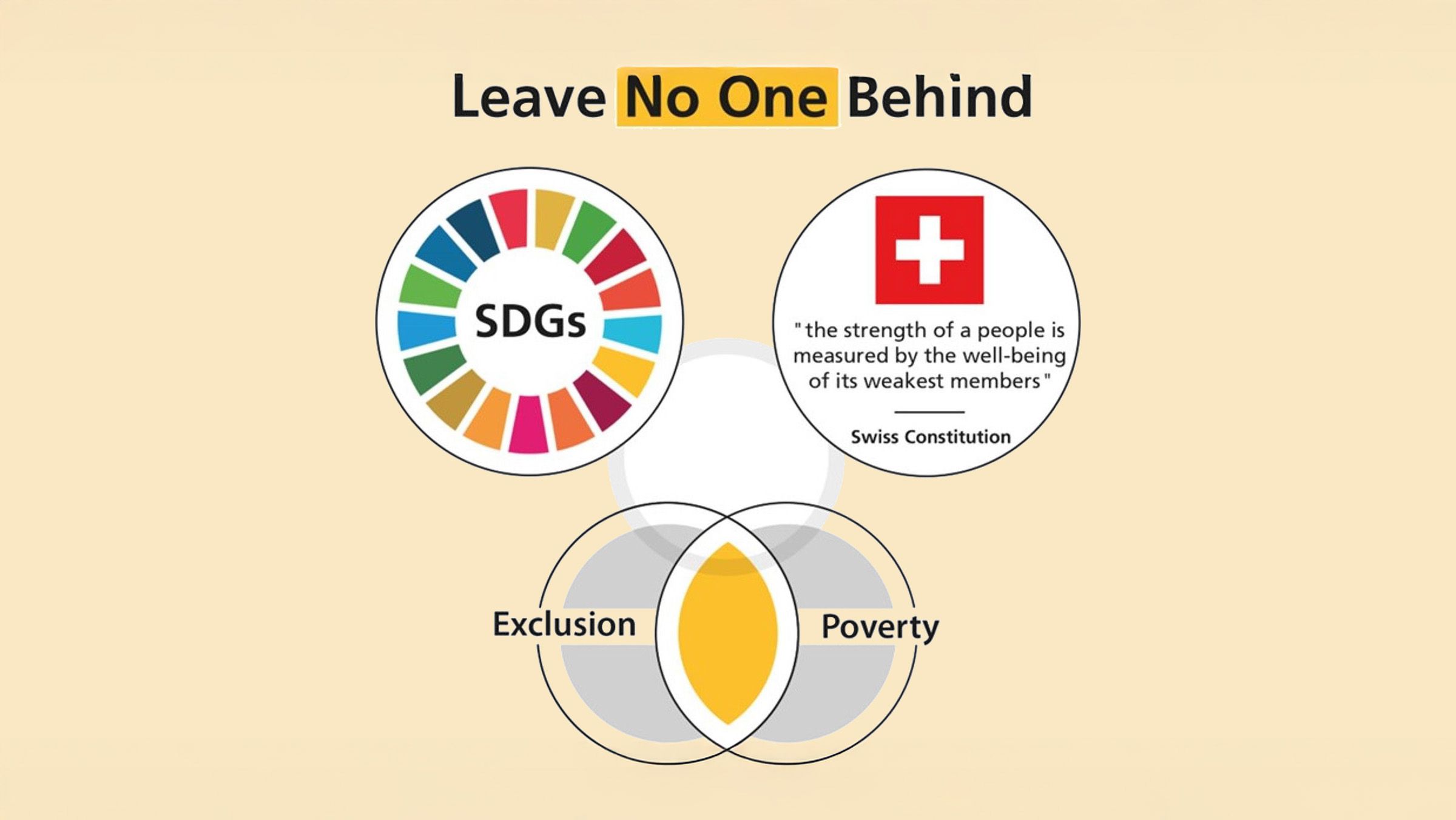
Leave no one behind (LNOB) is the central pledge of the 2030 Agenda, recognising the need to combat poverty and inequalities. In fact, leaving no one behind is indispensable in order to meet the Sustainable Development Goals.
On this page, you can find out about the ‹why›, the ‹what› and the ‹how› of implementation of the LNOB pledge at SDC, about the work of other organisations on LNOB and thematic links related to LNOB.
Excerpts and snapshots from an online lecture on ‹Leave No One Behind› for the Handong Global University in Pohang, South Korea, in September 2020, delivered by Ambassador Thomas Gass, then Assistant Director General at the Swiss Agency for Development and Cooperation (SDC):





Thematic Links related to Leave No One Behind

Data and Leave No One Behind
On this page, you can access reports, studies, lessons learned and other publications from various organisations dedicated to the topic of data related to Leave No One Behind.
Human Rights-Based Approach
Education
- UNESCO Global Education Monitoring Report - Gender Report: Deepening the debate on those still left behind Link
Water
- UNICEF: Taking Action to Achieve Inclusive WASH (2023)
- Millenium Water Story: Status of the Human Right to Water in Mumbai (29 July 2019)
- Summary of the Rural Water Supply Network webinar series 2019: Solutions how to address barriers to leave no one behind
- Leave No One Behind Webinar: What Does it Mean for Rural Water Supply? - French version
Tools on Leave No One Behind

Leave No One Behind in Practice
Leave no one behind (LNOB) is the central pledge of the 2030 Agenda, recognising the need to combat poverty and inequalities. In fact, leaving no one behind is indispensable in order to meet the Sustainable Development Goals. This dedicated page features the SDC Guidance on LNOB and practical working aids for specific fields. All documents are available in at least English and French.

Participatory Assessments Focusing on Intended Target Groups: A methodology to leave no one behind
Participatory assessment (PA) aspires to assess an intervention and its results from the perspective of its ‘beneficiaries’ or primary stakeholders.
LNOB at SDC
Eichenweg 5
Switzerland - 3003 Bern