
Data and Leave No One Behind
On this page, you can access reports, studies, lessons learned and other publications from various organisations dedicated to the topic of data related to Leave No One Behind.
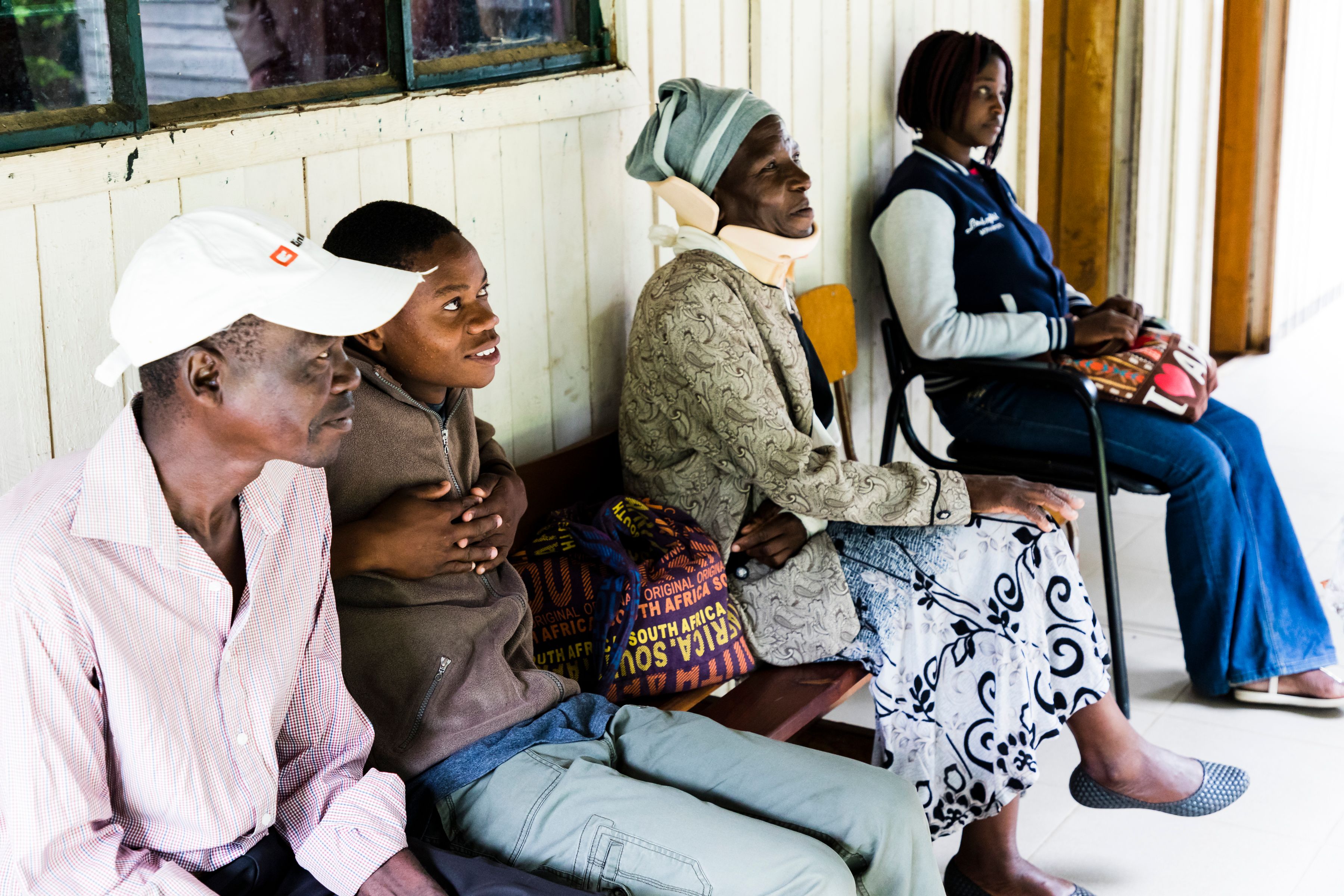
In order for people to count, you need to count people.
Development Initiatives: Economic poverty trends: Global, regional and national (2023)
This factsheet provides an overview of poverty trends at global, regional and national levels. It unpacks the terminology used to describe poverty and explains how it is measured. Measuring poverty is vital because it supports action to improve the lives of people currently living in poverty and those at risk of experiencing poverty in the future. It provides the information required to support better decision-making, influence policy outcomes and increase accountability.
Read more»
Read more»
Development Initiatives: The Data Side of Leaving No One Behind (2021)
«In order for people to count, you need to count people.»
Births need to be registered, visits to health facilities need to be recorded, progress through school needs to be monitored. This is not the case in low income countries, particularly in fragile and conflict-affected states.
To contribute to a better data collection, analysis and use, Development Initiatives developed their own approach called data landscaping. Its covers the political economy of data within a country; the structures and standards that govern the collection, the use of data, and much more. Every country has its own unique political economy, but that is not to say there are not many similarities. This report is the first attempt at mapping out this common ground at the national level and sharing revealing findings on what needs to be in place for people to be counted so they start counting.
Read more»
Births need to be registered, visits to health facilities need to be recorded, progress through school needs to be monitored. This is not the case in low income countries, particularly in fragile and conflict-affected states.
To contribute to a better data collection, analysis and use, Development Initiatives developed their own approach called data landscaping. Its covers the political economy of data within a country; the structures and standards that govern the collection, the use of data, and much more. Every country has its own unique political economy, but that is not to say there are not many similarities. This report is the first attempt at mapping out this common ground at the national level and sharing revealing findings on what needs to be in place for people to be counted so they start counting.
Read more»
World Development Report: Data for Better Lives (2021)
Data, which are growing at an unprecedented rate, are becoming an integral part of the daily lives of most people everywhere. But how does that matter for the more than 700 million people living in extreme poverty? According to this report by the World Bank, data can improve social and economic outcomes. But only if they are used systematically in ways that create information that generates insights that improve lives.
The report aims to answer two fundamental questions. First, how can data better advance development objectives? Second, what kind of data governance arrangements are needed to use data in a safe, ethical, and secure way while also delivering value equitably?
Download the report in multiple languages here»
The report aims to answer two fundamental questions. First, how can data better advance development objectives? Second, what kind of data governance arrangements are needed to use data in a safe, ethical, and secure way while also delivering value equitably?
Download the report in multiple languages here»
Lessons Learned Report: Advancing Inclusive SDG Data Partnerships (2021)
Achieving the SDGs requires that progress and lags are being effectively monitored and reported. Monitoring and reporting can pinpoint where meeting the goals is on track, where progress is uneven, and where new approaches are needed. Existing official statistics are not enough to meet these monitoring and reporting needs. To fill the gap, alternative data sources, can complement official statistics to meet the SDG data challenge and ensure that no one is left behind. This joint learning report with Partners for Review (hosted by GIZ), the Danish Institute for Human Rights and the International Civil Society Centre summarises the initial experience and learnings generated by the SDG Data Partnerships initiative, which aims to support an enabling environment for inclusive collaborations.
Read more»
Read more»
An Unequal Pandemic: Insights and Evidence from Communities and Civil Society Organisations (2021)
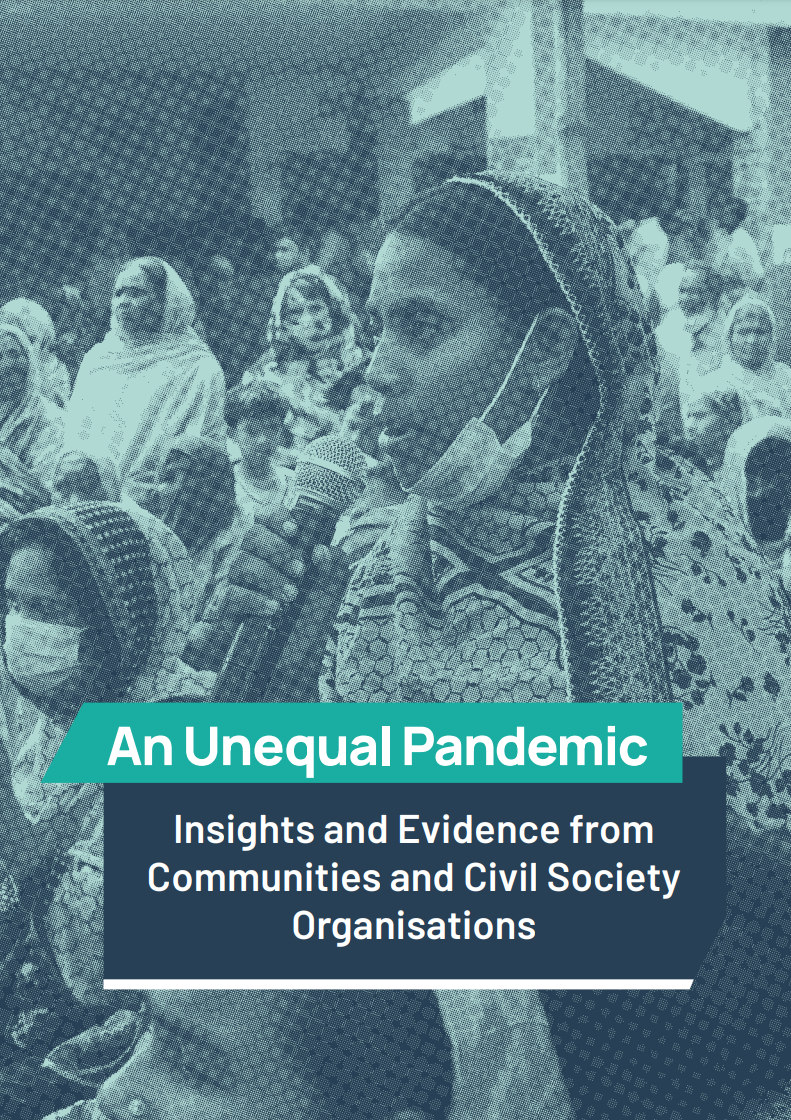
Effective COVID-19 pandemic responses and recoveries require a comprehensive understanding of both the impact of COVID-19 on people who have been marginalised and the strategies used by communities to adapt to and manage these impacts. Data collected by communities and civil society organisations (CSOs) can increase the visibility of people and groups overlooked by official data, improving understanding of their situations and coping strategies. “We must challenge the limitations of data generated and/ or validated by National Statistical Offices if we want data that truly represents the experience of all of society." This collaborative report with the GPSDD network provides important recommendations that, if implemented, will help place communities at the centre of pandemic response and recovery.
Read more»
Read more»
Indicators matter to leave no one behind: An indicator toolbox to leave no one behind in fighting poverty and inequality & a practical guide for project designers and implementers (2021)
Indicators matter in achieving the 2030 Agenda’s pledge to leave no one behind. As quantitative or qualitative variables, indicators provide a simple and reliable way to measure achievements of development efforts. They can show and track if aid spending is reaching the poor and left behind groups in various contexts. Moreover, what is measured is more likely to get attention, because indicators provide a solid basis for evidence-based decision-making in development projects as well as politics.
There is a need for additional efforts to design and use indicators that measure the progress for left behind groups. The new study, commissioned by GIZ and supported by the SDC, and available in English, French and German,
provides an indicator toolbox to leave no one behind in fighting poverty and inequality as a practical guide for project designers and implementers to strengthen indicators by making them pro-poor as well as inequality- and LNOB-sensitive.
Read study in English»
Lire l'étude en français»
Studie auf Deutsch lesen»
There is a need for additional efforts to design and use indicators that measure the progress for left behind groups. The new study, commissioned by GIZ and supported by the SDC, and available in English, French and German,
provides an indicator toolbox to leave no one behind in fighting poverty and inequality as a practical guide for project designers and implementers to strengthen indicators by making them pro-poor as well as inequality- and LNOB-sensitive.
Read study in English»
Lire l'étude en français»
Studie auf Deutsch lesen»
Still left behind? Tracking children’s progress against the pledge to Leave No One Behind (2020)
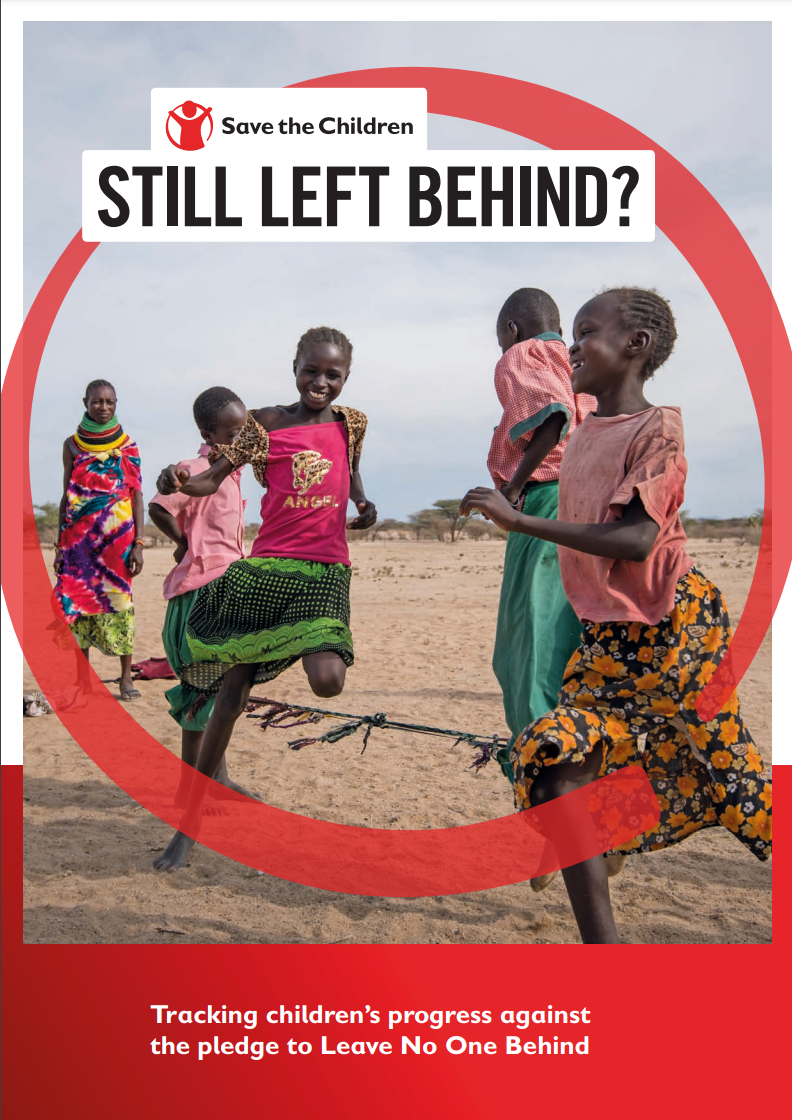
Save the Children's report shows how limited progresses has been made and tackles the issue of monitoring and reviewing of the SDGs when disaggregated data on those who are furthest behind are still lacking. Consequently, the report illustrates how SDG data monitoring focused on the LNOB principle could look like. Five child poverty indicators (child mortality, malnutrition, child marriage, birth registration and primary education) are being calculated, focusing on the progress trends of the world's poorest 20% of households as compared to global average trends. Find out more»
Furthermore, Save the Children created a tool, the Group-Based Inequality Database (GRID) Child Inequality Tracker» to illustrate ways of monitoring SDGs' progresses nationally, taking into account the children who are furthest behind.
Furthermore, Save the Children created a tool, the Group-Based Inequality Database (GRID) Child Inequality Tracker» to illustrate ways of monitoring SDGs' progresses nationally, taking into account the children who are furthest behind.
No, 70% of the world’s poor aren’t women, but that doesn’t mean poverty isn’t sexist
«Seventy percent of the world’s extreme poor are women». If you’ve encountered this statistic before, please raise your hand. That is a lot of hands. And yet, this is what we call a ‹zombie statistic›: often quoted but rarely, if ever, presented with a source from which the number can be replicated. In fact, what we know from existing data is that women account for about 50 percent, not 70 percent, of the world’s extreme poor—although, as is argued in the following World Bank blog, this does not mean poverty is gender neutral.