Published on 29 July 2024

Tackling Inequality

On this page, you can explore the most relevant databases and publications on inequality.
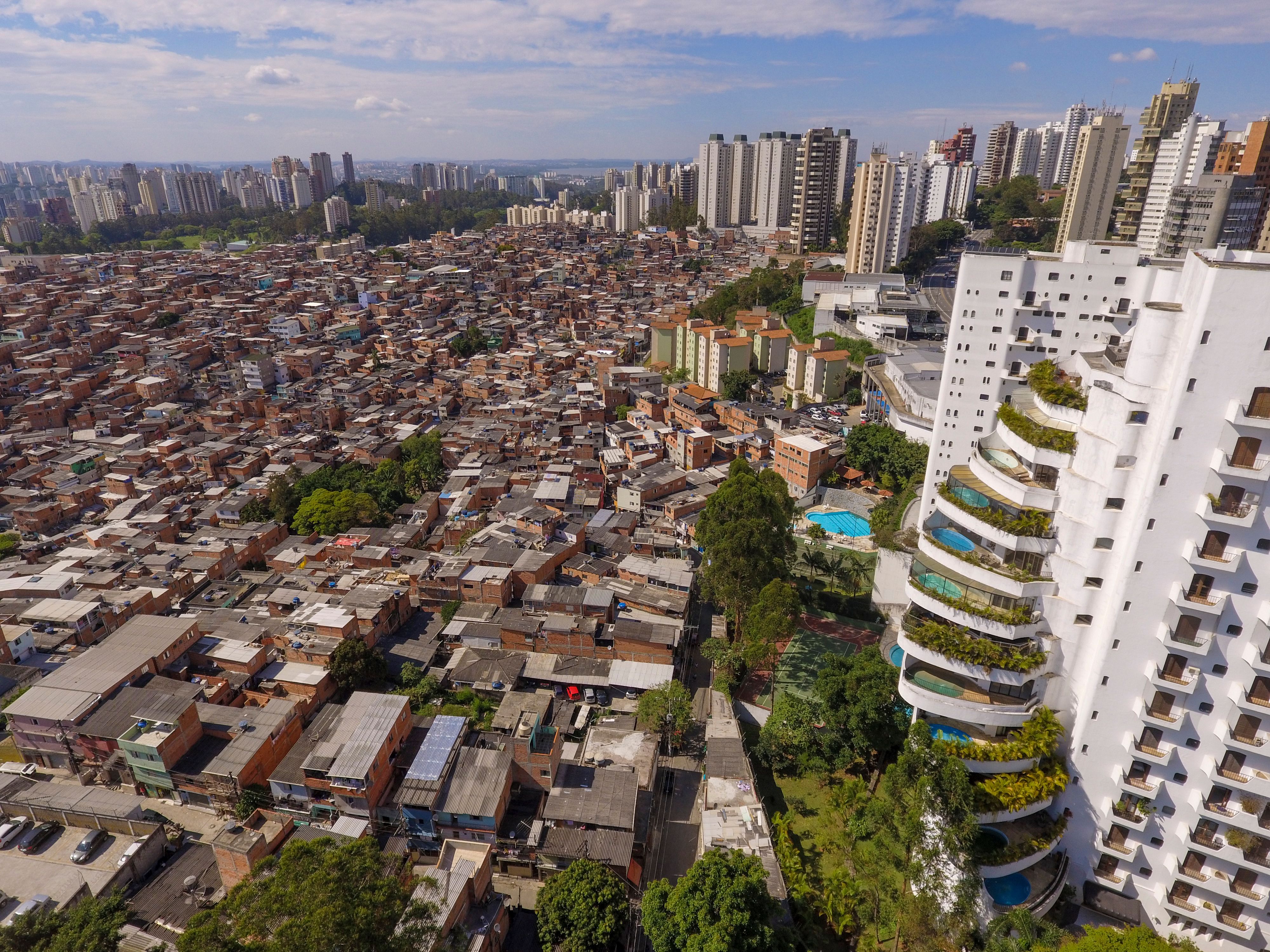
The Paraisópolis slum, the largest in the city of São Paulo, is located next to Morumbi, a wealthy neighborhood with high-end residential buildings.

In the SDC Guidance on Leave No One Behind, the SDC Management makes four commitments which include “aiming for transformative change by tackling exclusion, discrimination and inequality", emphasizing how “exclusion and discrimination are the result of deeply rooted power structures and mind-sets resulting in policies and behaviours that tend to entrench existing inequalities".

Inequality is not poverty, but inequality – or the absence of fundamental rights, freedoms, and opportunities – is a central characteristic of poverty. Addressing inequalities is not only a moral imperative, but from a social perspective, increasing inequality is seen as an impediment to economic growth and development, poverty eradication efforts and social stability.

Reducing inequality is considered a necessity to unleash the human and productive potential of people to achieve sustainable and inclusive growth, especially now as the current pandemic of COVID-19 is exposing grave inequalities:

Everything we do during and after this crisis [COVID-19] must be with a strong focus on building more equal, inclusive and sustainable economies and societies that are more resilient in the face of pandemics, climate change, and the many other global challenges we face.
António Guterres, Secretary-General, United Nations

World Inequality Database

Snapshot of World Inequality Database

Browse the World Inequality Database here»

Publications

UNDP: Human Development Report 2023-2024 - Breakind the gridlock: Reimagining cooperation in a polarised world
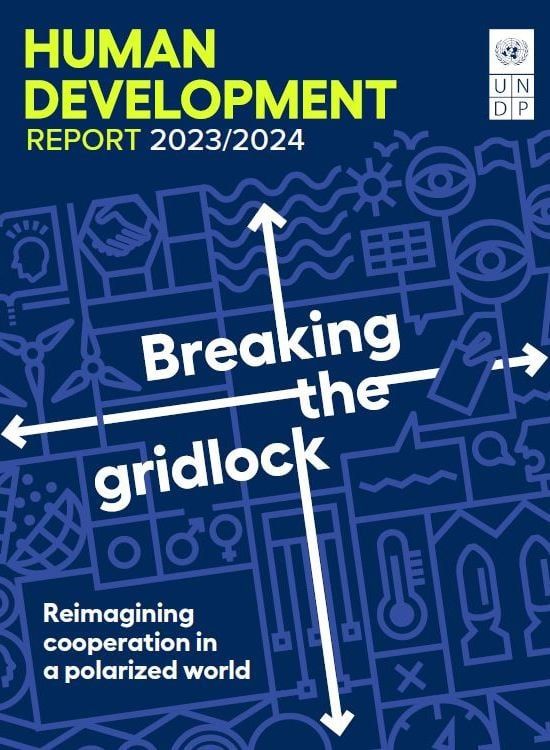
Cover photo of UNDP: Human Development Report 2023-2024
The 2023/24 Human Development Report assesses the dangerous gridlock resulting from uneven development progress, intensifying inequality, and escalating political polarization, that we must urgently tackle. The report emphasizes how global interdependence is being reconfigured and proposes a path forward where multilateralism plays a pivotal role.

Read more»

UNDESA: World Social Report 2023 - Leaving No One Behind in an Ageing World
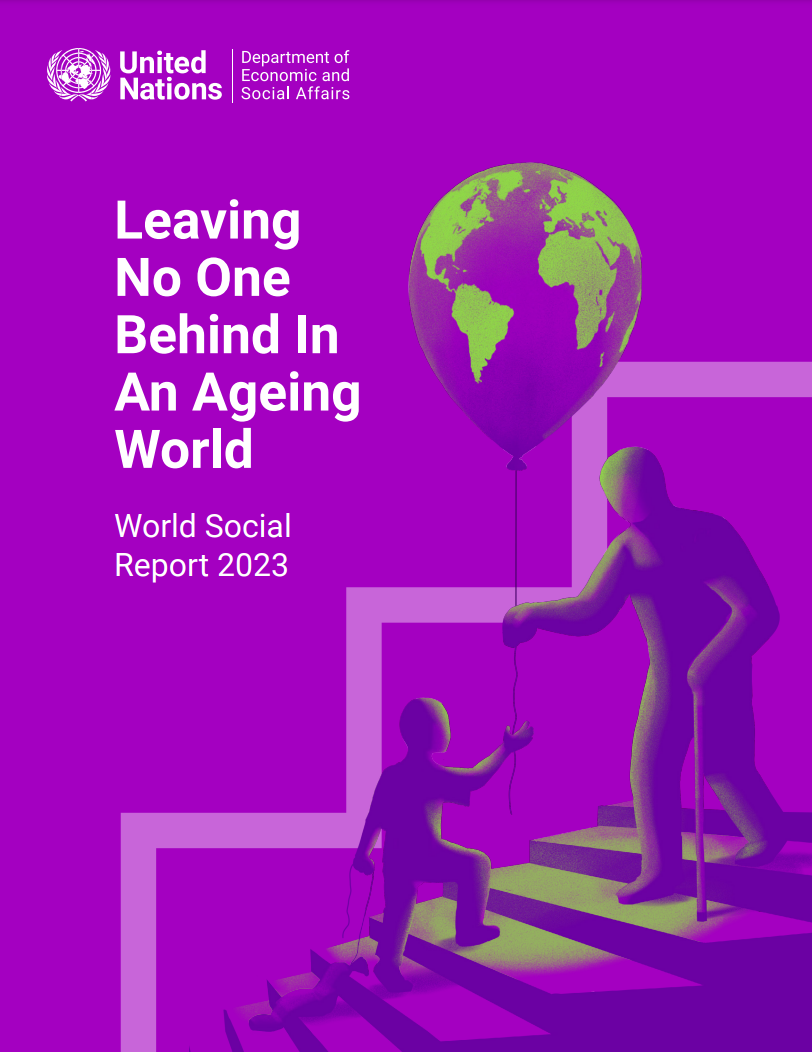
Cover photo of World Social Report 2023
The World Social Report 2023, published by the UN Department of Economic and Social Affairs, including its analysis and review of policy options to address population ageing, is intended to provide world leaders with information and policy guidance as they chart a path forward and renew commitments to achieving the SDGs at the SDG Summit in September 2023.

Read more»

CONCORD: The road to equality: How do EU Member States address inequalities through international cooperation? (2022)
Cover page of The Road to Equality: How do EU Member States address inequalities through international cooperation?
«I am putting the fight against inequalities at the heart of our international cooperation,» said Jutta Urpilainen, the European Union’s Commissioner for International Partnerships. A year later, CONCORD published the report on the «road to equality», which follows up on the member states’ pledges to tackle global inequalities. Do the actions match their words? The sobering conclusion of the EU-wide analysis is that despite all political commitment, action remains insufficient. Identified problems include a lack of policy coherence and the failure of EU states to redistribute wealth. However, the authors also highlight best practices and provide concrete suggestions for improving the efforts to reduce inequalities.


Read more»

Development Initiatives: Inequality, measuring it and why it matters for poverty reduction (2022)
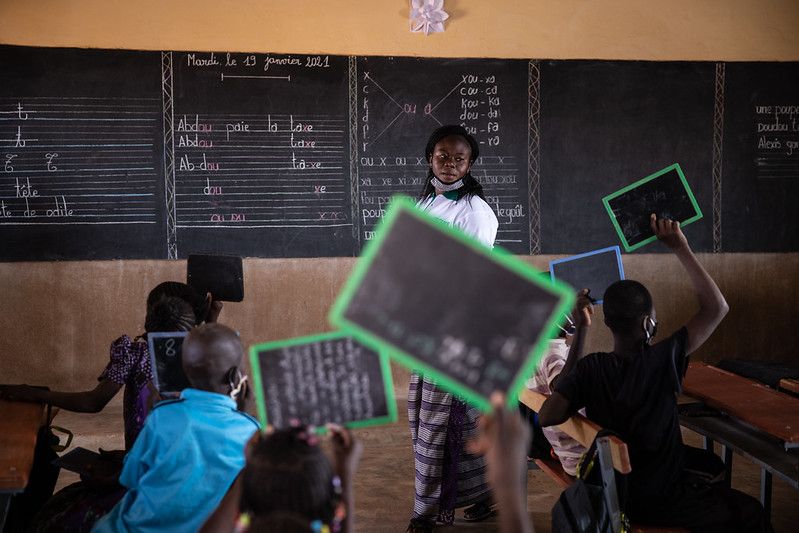
Helping children get back to school in conflict-torn Burkina Faso
Leaving no one behind means fighting both poverty and exclusion. To do so, tackling inequality must be a central element of international development efforts. A recent briefing by Development initiatives explores the topic of inequality and why it matters for poverty reduction. Like poverty, inequality is a multidimensional phenomenon. Economic inequalities and the unequal distribution of resources are oftentimes linked to social and political inequalities. Moreover, “recognising and understanding horizontal inequalities, where people face exclusion and discrimination based on their identity, is critical to tackling the root cause of poverty and to Leave No One Behind."

Read more»

Oxfam report 'Inequality kills: The unparalleled action needed to combat unprecedented inequality in the wake of COVID-19 (2022)
Cover page of Oxfam Report: Inequality Kills
Oxfam's report highlights that the pandemic has caused inequality to rise while inequalities have also made Covid-19 deadlier and more damaging to livelihoods. Through factors like access to vaccination, inequalities have made the pandemic's effects particularly severe: The more unequal a country is, the more fatal the virus becomes. At the same time, the pandemic creates new inequalities and cements existing ones: While 99% percent of the world has suffered financially from Covid-19, the increase in wealth of the world's billionaires has surged since the pandemic began.

Read more»

World Inequality Report (2022)
Cover photo of World Inequality Report 2022
The World Inequality Report 2022 synthesises four years of international research on global economic inequality and provides uncomfortable, but important facts: The poorest half of the world's population earns less than 10% of global income and owns only 2% of global wealth. Compared to men, women earn only a third of global income. And did you know that the Middle East is the most unequal region in the world?
The World Inequality Lab's new report shows that inequality is a political choice. Tracking data on inequalities and taking redistributive measures against them will remain essential for addressing global challenges such as climate change or leaving no one behind.

Read more»

The moving fault lines of inequality – a dossier (2021)
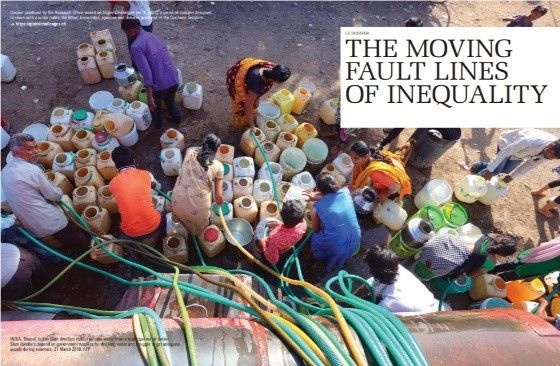
Cover photo of The moving fault lines of inequality
While poverty has diminished in absolute terms, and relative income has grown on a global scale for over two centuries, inequality has been steadily increasing since the early 1980s. With the financial crisis of 2007, the expanding digitalisation of the economy and the current pandemic, fortunes of the superrich have attained unprecedented levels, with revenue now concentrated in society's top percentiles. This Dossier looks at the causes behind the multifaceted growth of inequality(ies), anticipates their noxious fallouts and explores potential remedies. 

This Dossier is produced by the Research Office and based on the latest issue of Global Challenges, showcasing findings from the Institute’s research community and including maps, podcasts, video interviews and infographics.

Read more»

Synthesis 2017-2020 of the EU-AFD Research Facility on Inequalities (in English)
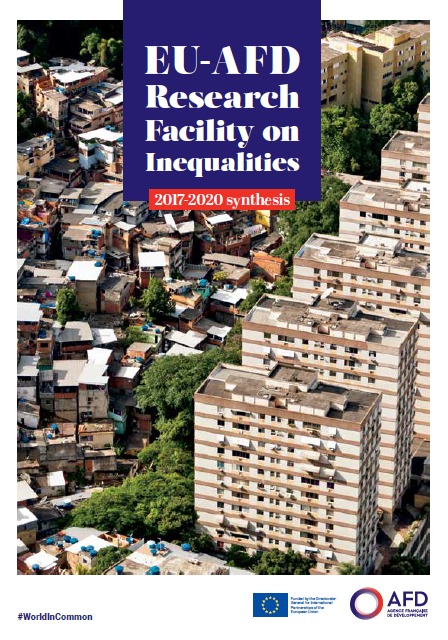
Cover photo of EU-AFD Research Facility on Inequalities
A 4-million euro programme to better understand inequalities in low and middle income countries, the EU-AFD Research Facility on Inequality was funded by the European Commission’s Directorate-General for International Partnerships (INTPA). It has been implemented over a three-year period (2017-2020) by the Agence Française de Développement (AFD), jointly with research centers from low, middle and high income countries. This synthesis presents the context, structure and, above all, the results and recommendations of each of the 22 projects that were carried out.

Read report»
For further publications from the Research Facility, see here»

Synthèse 2017-2020 de la Facilité de Recherche UE-AFD sur les inégalités (en français)
Cover photo of Facilité de Recherche UE-AFD sur les inégalités
Un programme de 4 millions d'euros visant à mieux comprendre les inégalités dans les pays à revenu faible et intermédiaire. La Facilité de recherche UE-AFD sur les inégalités a été financé par la Direction générale des partenariats internationaux (INTPA) de la Commission européenne. Il a été mis en œuvre par l'AFD, sur une période de trois ans (2017-2020), conjointement avec des centres de recherche des pays à revenu faible, intermédiaire et élevé. Cette synthèse présente le contexte, la structure et, notamment, les résultats et recommandations en termes de politiques publiques de chacun des 22 projets réalisés.

Lire le rapport complet en français»
Pour d'autres publications de la facilité de recherche, voir ici»

Oxfam: The Inequality Virus - Bringing together a world torn apart by coronavirus through a fair, just and sustainable economy (2021)
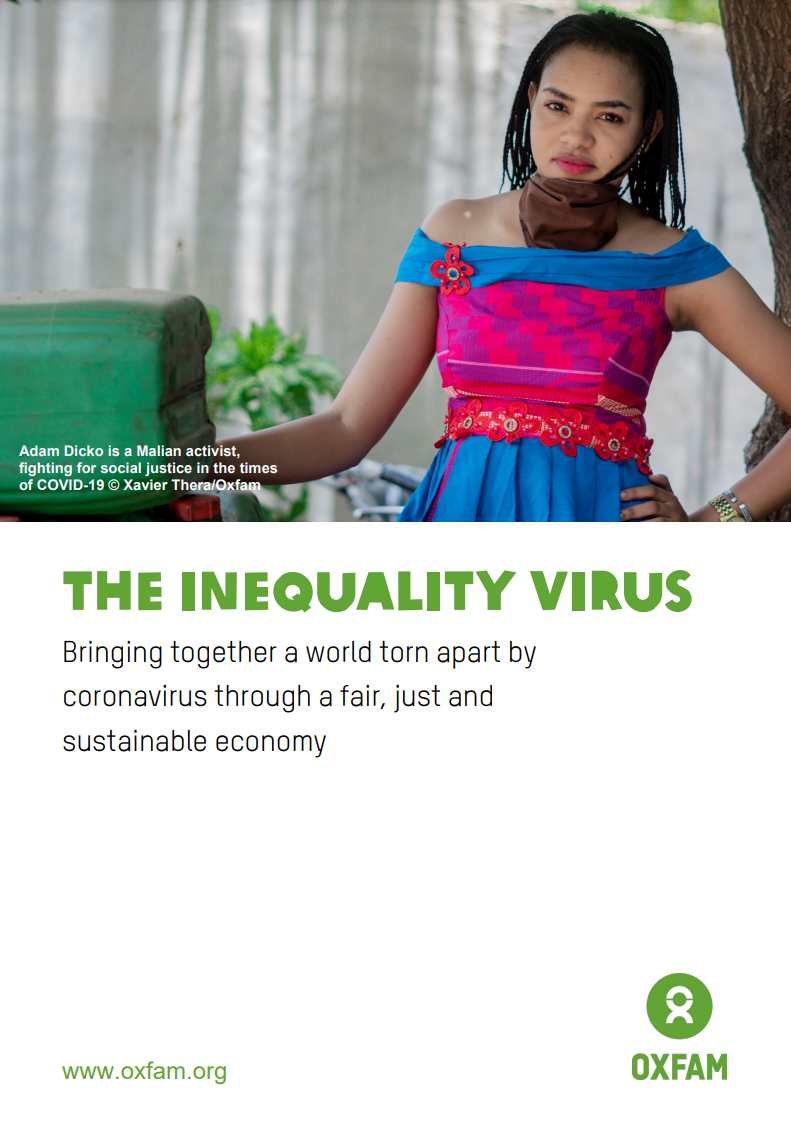
Cover photo of The Inequality Virus
“It took just nine months for the fortunes of the top 1'000 billionaires to return to their pre-pandemic highs, while for the world's poorest, recovery could take more than a decade."

In ‹The Inequality Virus› – the 2021 version of its annual inequality report, Oxfam underlines how the coronavirus pandemic has exposed our collective frailty and the inability of a deeply unequal economy to work for all. At the same time, it has also shown the vital importance of government action to protect our health and livelihoods. The report stresses that there can be no return to where we were before. Instead, citizens and governments must act on the urgency to create a more equal and sustainable world.

Read more»

Courrier international: L'atlas des inégalités (2019)
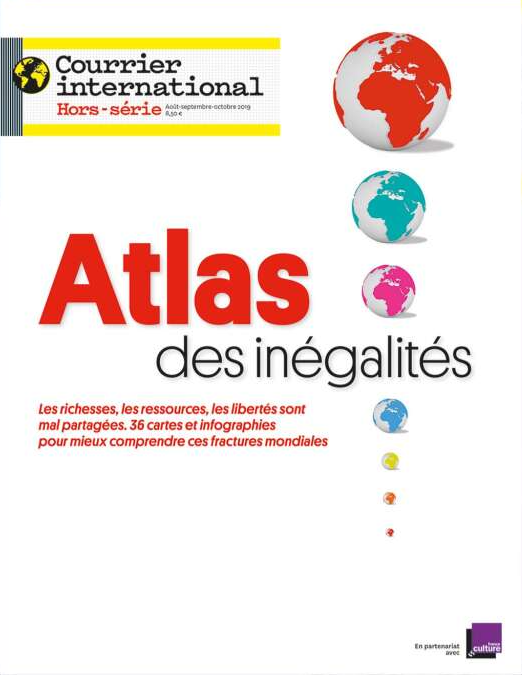
Cover photo of Courrier International: Atlas des inégalités
The journal ‹Courrier international› has published a special edition (hors-série) on the topic of inequality. The ‹Atlas des inégalités› (only available in French) is a compilation of 36 maps and infographics that helps to better understand the unequal distribution of wealth, resources and civic liberties. The different articles are structured in five chapters: existence, wealth, resources, civic liberties, environment and present data from all over the world, completed with short explanatory texts.

Read more»

CONCORD: Inequalities Unwrapped - An urgent call for systemic change (2018)
CONCORD Inequalities Unwrapped
Rising inequalities are among the most complex and pressing issues of our century. Protests around the world show the urgency of the matter. How can we tackle this multidimensional problem to ensure no one is left behind? Understanding the dimensions and drivers of the various forms of inequalities is essential to identify the most appropriate and sustainable solutions for this complex global challenge. Read in the new report of the European NGO Confederation for Relief and Development (Concord) how the international community should address this pressing matter, for people around the world and generations to come.

Read more»

World Economic Forum: Inclusive Development Index (2018)
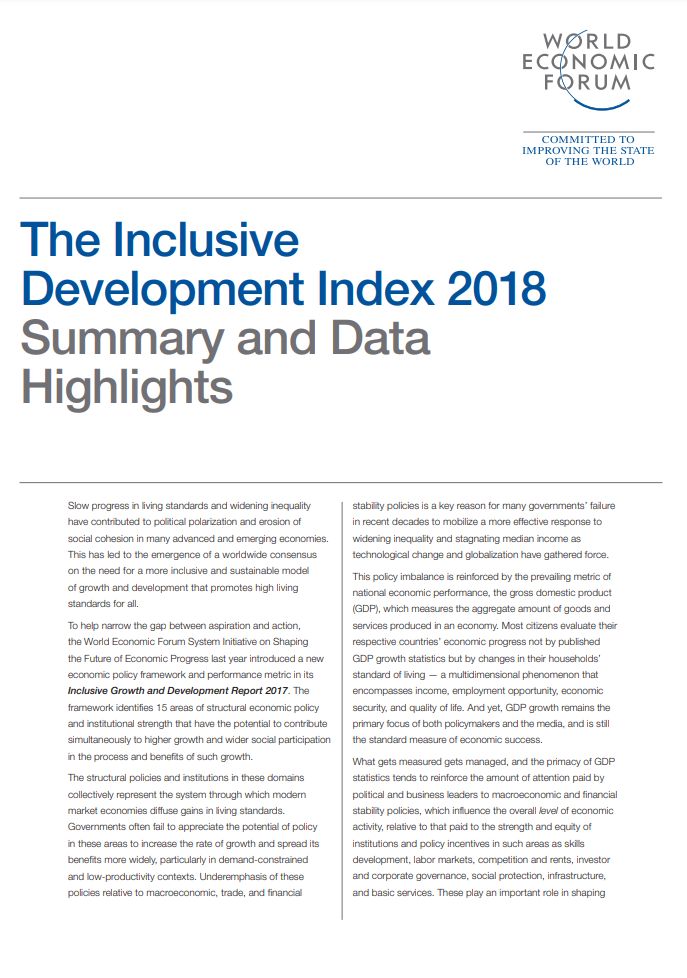
Cover photo WEF: Inclusive Development Index 2018
Slow progress in living standards and widening inequality have contributed to political polarization and erosion of social cohesion in many advanced and emerging economies. This has led to the emergence of a worldwide consensus on the need for a more inclusive and sustainable model of growth and development that promotes high living standards for all.

Designed as an alternative to GDP, the Inclusive Development Index (IDI) reflects more closely the criteria by which people evaluate their countries’ economic progress.

Read more»