
First nationwide measurements in Switzerland show low levels of microplastics entering the environment from wastewater treatment plants
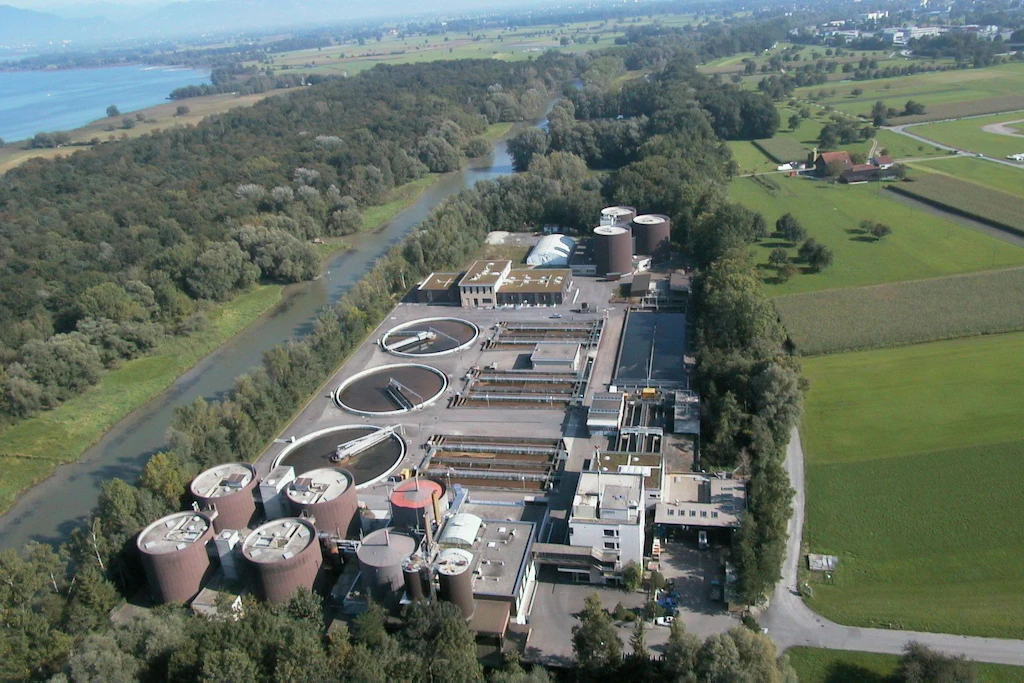
Dübendorf, 10.09.2026 — Every year, Swiss wastewater treatment plants release around 5 tonnes of microplastics into the environment. That is relatively little: It is estimated that around twice as many microplastic enters Swiss water bodies via the atmosphere. These figures come from the largest nationwide investigation to date on ultrafine plastic particles in the air, water and soil, a joint project by Eawag, Empa and Agroscope. These figures were made possible thanks to a new approach to sampling that yields significantly more reliable results than previous processes..
When washing up, tiny plastic particles come off the sponge. When synthetic clothes are washed, microfibres end up in the wastewater. Microplastics are omnipresent in everyday life – and yet almost intangible, as microplastic particles are technically difficult to measure. Accordingly, there has so far been a lack of reliable data on their total concentration in the Swiss environment.
“Analysing microplastics is a complex process, and many studies use different methods. This makes it difficult to compare results and extrapolate them to larger regions,” says Guillaume Crosset-Perrotin. He is a PhD student in Ralf Kägi’s group at the Aquatic Research Institute Eawag and led the study, funded by the Federal Office for the Environment (FOEN), which provides the first reliable estimate of microplastic inputs from Swiss wastewater treatment plants. This investigation is a joint project between Eawag, Empa and Agroscope, which aims to investigate pollution in water, air and soil. The results were published in the journal ACS ES&T Water. Particles from tyre abrasion, some of which are also classified as microplastics, were excluded from the study due to analytical difficulties. This issue is currently being addressed separately in other joint projects.
First nationwide figures based on measurement data
The measurements taken at 51 wastewater treatment plants, which serve around 44 per cent of the Swiss population, enable the first robust estimate to be made at national level. According to this, 4.7 tonnes of microplastics enter Swiss ecosystems from sewage treatment plants every year. Per inhabitant, this amounts to half a gram per year, or roughly the amount of plastic in a drinking straw. The limited amount of internationally comparable data – for example, from Denmark – is of a similar order of magnitude.
The study examined both industrial and municipal wastewater treatment plants. Overall, no systematic differences were observed. However, there are a few notable outliers, which, according to the study’s authors, are attributable to specific processes at the wastewater treatment plants. For example, particularly high concentrations of polypropylene (PP) particles were measured at one wastewater treatment plant. “A PP carrier material is used in one stage of the treatment process – we suspect that this material itself releases particles into the sewage sludge,” explains Guillaume Crosset-Perrotin.
Sewage sludge as the key to measurement
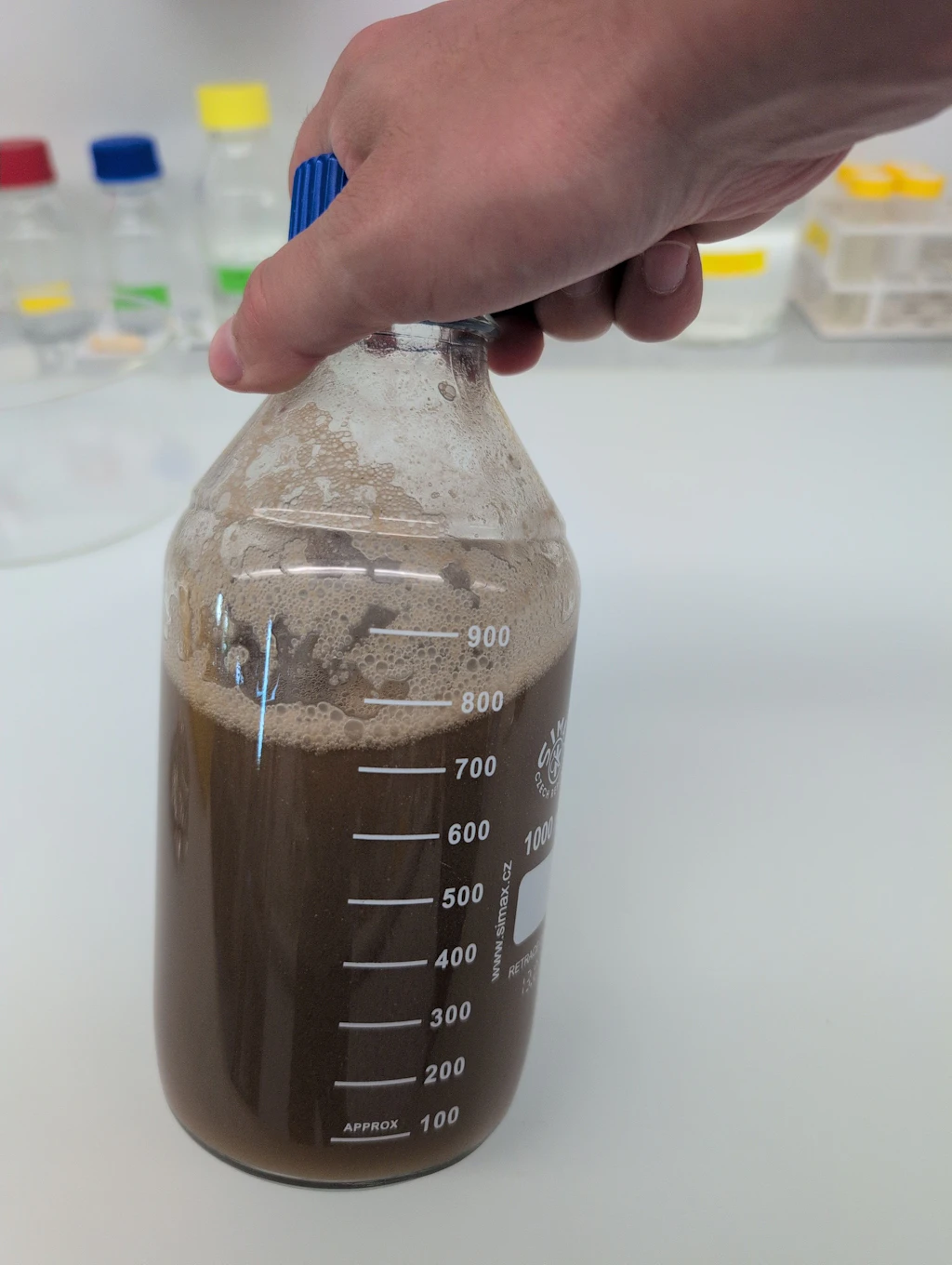
In order to obtain more reliable data than before, the team focused on the sampling process. In doing so, the researchers adopted an unusual approach: Instead of measuring the microplastic particles in the treated wastewater, they analysed the sewage sludge. “At first glance, this seems contradictory,” says Crosset-Perrotin. ‘After all, we wanted to know what was leaving the plant – not what was inside it.’
The advantage: Microplastics adhere to larger sludge flocs. Although these are also present in treated wastewater, their concentration there is significantly lower. This is why they can be detected more easily and reliably in sewage sludge than microscopic particles dispersed freely in the effluent. The researchers therefore set out to determine how many microplastic particles (with sizes larger than 20 µm) were attached to the flocs– and found that almost all of them were. The amount of sludge flocs leaving a treatment plant with the treated wastewater is already routinely measured at wastewater treatment plants. Based on the known quantity of sludge flocs being discharged and the concentration of microplastics per floc, they were therefore able to estimate how many microplastic particles leave the plants in total. Verification tests confirmed the results.


Not just wastewater as a source
However, wastewater treatment plants are not the only source through which microplastics are released into the environment. Empa’s findings show that the atmosphere also contributes significantly to pollution: Christoph Hüglin’s team has estimated that around 10 tonnes of microplastics enter Swiss waters from the air every year – twice the amount from wastewater treatment plants. The researchers emphasise that this classification is crucial to understanding the significance of the individual pathways of entry. “Only with reliable data can we determine where the biggest sources of pollution lie and which measures are appropriate,” says Guillaume Crosset-Perrotin.
The impact of microplastics on human health and the environment remains a subject of research. Whilst their long-term effects remain unclear, it is important to minimise the release of plastic particles into the environment as far as possible. The Eawag study shows: A certain amount can be captured through wastewater treatment. In Switzerland, wastewater treatment plants are currently being fitted with an additional treatment stage to improve the retention of micropollutants such as medicines and pesticides. “The new treatment stage will remove a significant proportion of the microplastic particles that have so far remained in the wastewater,” says Crosset-Perrotin.
However, the new data also highlight the limitations of this approach. A significant proportion of microplastics enters water bodies via the atmosphere – and thus beyond the reach of wastewater treatment plants. For Crosset-Perrotin, it is therefore clear that: “The key lies, above all, in emissions.” It is therefore crucial to reduce the introduction of plastics right at source. This includes using plastics only where necessary and reducing littering. “This is where politics, industry and civil society must step up,” the researcher emphasises.
State-of-the-art particle laboratory run by Eawag, Empa and Agroscope
To investigate the release of microplastics into the environment, researchers from Eawag, Empa and Agroscope are working closely together, drawing on their interdisciplinary expertise to gain a comprehensive understanding of the pollution of bodies of water, soil and the atmosphere. The particle laboratory at Eawag is available for the analysis of microplastic particles. At the end of last year, two new state-of-the-art infrared microscopes were commissioned there; these are being continuously optimised by the researchers in collaboration with the manufacturer. The equipment was jointly funded by the three research institutes and further significantly increases the capacity for analysing microplastics. https://www.eawag.ch/en/department/eng/main-focus/particle-laboratory/
Press release with sources, links and further information: https://www.eawag.ch/en/info/portal/news/news-detail/first-nationwide-measurements-in-switzerland-show-low-levels-of-microplastics-entering-the-environment-from-wastewater-treatment-plants/