
Domestic biomethane can make Switzerland more independent
Villigen, 16.04.2026 — By using biomass intelligently, Switzerland could meet a substantial percentage of its own gas needs. This is the conclusion reached by a study led by the Paul Scherrer Institute PSI. Gas imports could be significantly reduced as a result, making Switzerland less dependent on the global market. The study was commissioned by the Swiss Federal Office of Energy (SFOE) and published at the beginning of this year.
The current turbulent global situation is leading to sharp fluctuations in the energy markets. The rise in oil and gas prices is dampening the economic outlook and increasing the risk of inflation. “But there are ways of reducing our dependence on fossil fuel imports and so substantially immunising our economy against such events,” says Tilman Schildhauer. The chemical engineer works at the PSI Center for Energy and Environmental Sciences, where he conducts research in the field of methanation and power-to-X technologies. Working with two colleagues, he has carried out a new study to analyse in detail the hidden potential of biomass, such as wood, sewage sludge and green waste, to replace fossil gas and thus release less carbon dioxide, which is harmful to the climate. Their findings are encouraging: wood gasifiers, biogas plants and similar facilities, could supply a substantial proportion of Switzerland’s future gas demand, which the study projects will decrease by a factor of three to five and is therefore expected to be considerably lower.
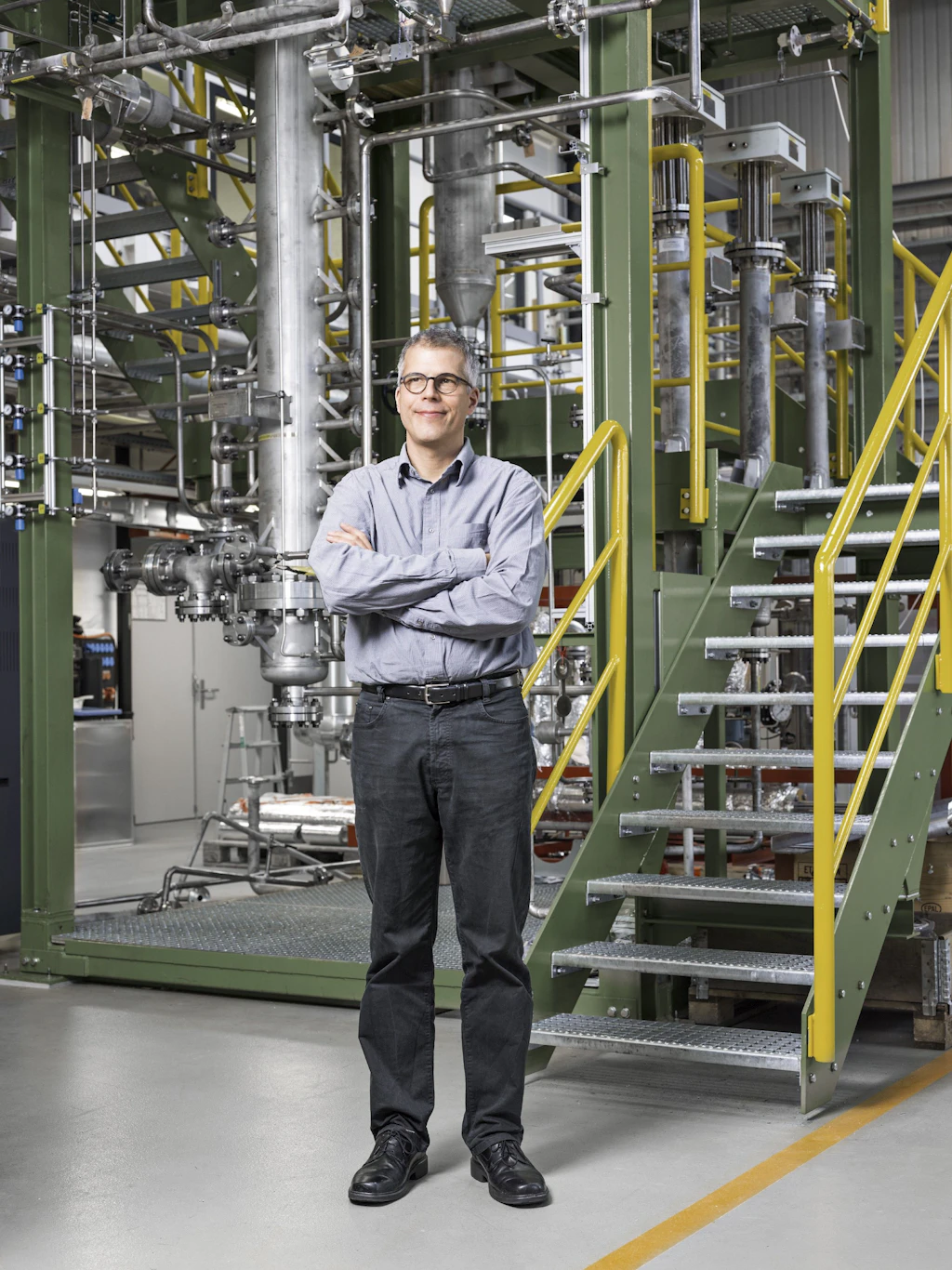
It is important to always keep the overall system in mind and not to take a compartmentalised view of local options.
The study was conducted by PSI and Verenum AG on behalf of the Swiss Federal Office of Energy (SFOE) and published on the SFOE website at the beginning of this year. The researchers carried out a detailed analysis of a wide range of different technologies, considering all their respective advantages and disadvantages. Converting wood residues, green waste, sewage sludge and other biomass not only generates electricity and heat. It can also be used to produce biomethane.
Reducing dependency
“We won’t achieve complete self-sufficiency when it comes to gas, but we can significantly reduce today’s extreme dependency,” Schildhauer explains. The study suggests that this would require two steps. First, the energy system as a whole needs to be switched to more efficient electrical technologies such as heat pumps. This alone will significantly reduce the demand for gas. And second, as much biomethane as possible should be produced from biomass.
This is because many processes will continue to depend on gas in the future. “This doesn’t just include gas-fired power stations, which have to step in during a power drought (dunkelflaute) when renewable sources supply too little electricity,” says Christian Bauer, who contributed to the study and works on life cycle assessments at PSI. Many high-temperature industrial processes and synthesis processes in the chemical and pharmaceutical industries will continue to depend on gas.
However, due to its population density and topography, Switzerland cannot grow plants solely to produce energy. “Nevertheless, we can replace a large part of the natural gas we import today with biomethane from our own sources,” says Bauer. The study found that around a quarter to half of expected future gas demand could be met by domestic sources. The rest does not have to be imported by gas tanker from distant countries but could also be sourced from other European countries with more agricultural and forest land.
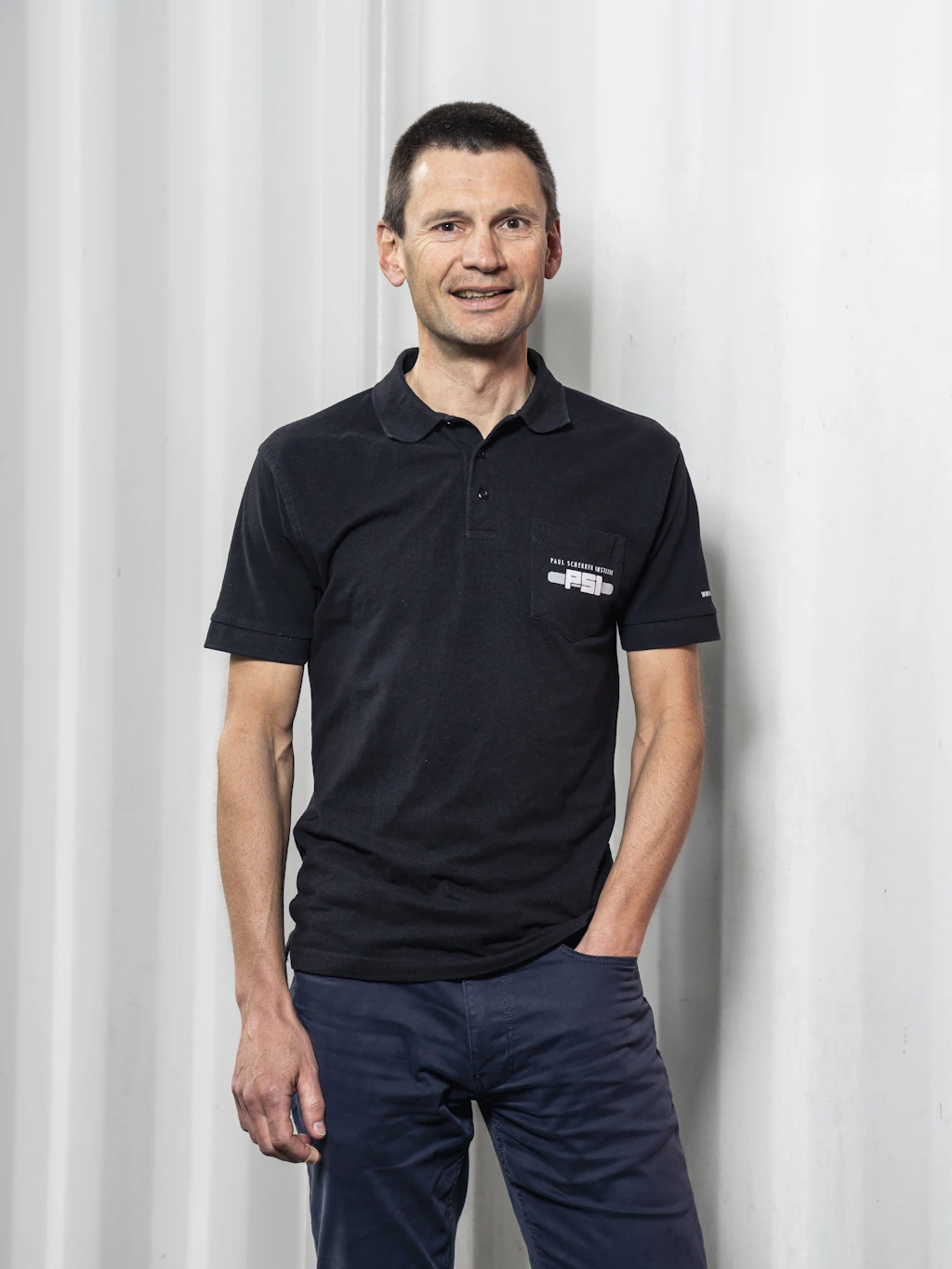
We can replace a large part of the natural gas we import today with biomethane from our own sources.
Intelligently combining facilities and infrastructure
But how can existing biomass be utilised as intelligently as possible? “It is important to always keep the overall system in mind and not to take a compartmentalised view of local options,” says Schildhauer, explaining the results of his analysis. It makes little sense, for example, to use transportable wood instead of heat pumps to produce hot water in a heating network, when elsewhere a large industrial company needs the wood, or the biomethane produced from it, for high-temperature processes and is forced to import energy sources instead.
Wood gasifiers are available as small units – typically with an output of around 35 kilowatts to 1 megawatt – or as large-scale projects. In small units, combustion usually takes place in the same vessel as gas production. This results in a gas mixture that is only partially combustible and cannot be fed directly into the gas grid. In larger installations, on the other hand, combustion is usually physically separated from gasification. “That gives you a product gas that is free of nitrogen and is also very suitable for methanation,” says Schildhauer. Nickel-based catalysts can be used to convert the carbon monoxide and carbon dioxide in the gas into methane and water. The water can then be separated out through condensation, resulting in biomethane. “We can feed this directly into the gas grid, but naturally that depends on having the appropriate grid infrastructure in place,” says Schildhauer.
The researcher is keen to point out that the biomass used to produce methane does not compete with food or animal feed production. “The material streams we are talking about would otherwise go to waste, and these volumes certainly have great potential,” he says. The required facilities have already reached a high level of technical maturity. Several new types of gasifiers could be ready for the market within the next few years. Following some initial investments, the energy system would gradually be restructured, which would significantly smooth out price fluctuations during global crises.
Text: Dirk Eidemüller
About PSI
The Paul Scherrer Institute PSI develops, builds and operates large, complex research facilities and makes them available to the national and international research community. The institute's own key research priorities are in the fields of future technologies, energy and climate, health innovation and fundamentals of nature. PSI is committed to the training of future generations. Therefore about one quarter of our staff are post-docs, post-graduates or apprentices. Altogether PSI employs 2300 people, thus being the largest research institute in Switzerland. The annual budget amounts to approximately CHF 450 million. PSI is part of the ETH Domain, with the other members being the two Swiss Federal Institutes of Technology, ETH Zurich and EPFL Lausanne, as well as Eawag (Swiss Federal Institute of Aquatic Science and Technology), Empa (Swiss Federal Laboratories for Materials Science and Technology) and WSL (Swiss Federal Institute for Forest, Snow and Landscape Research).
Contact
Dr. Tilman Schildhauer
PSI Center for Energy and Environmental Sciences
Paul Scherrer Institute PSI
+41 56 310 27 06
tilman.schildhauer@psi.ch
[German, English]
Christian Bauer
PSI Center for Energy and Environmental Sciences
PSI Center for Nuclear Engineering and Sciences
Paul Scherrer Institute PSI
+41 56 310 23 91
christian.bauer@psi.ch
[German, English]
Original publication
Technology monitoring. Biomass conversion: gasification, methanation, and pyrolysis
Thomas Nussbaumer, Tilman Schildhauer, Christian Bauer
Federal Office of Energy, 1.1.2026
https://www.bfe.admin.ch/bfe/de/home/versorgung/stromversorgung/bundesgesetz-erneuerbare-stromversorgung.exturl.html/aHR0cHM6Ly9wdWJkYi5iZmUuYWRtaW4uY2gvZGUvcHVibGljYX/Rpb24vZG93bmxvYWQvMTI0NTk=.html
Press release on the website of the Paul Scherrer Institute PSI:
https://www.psi.ch/en/news/media-releases/swiss-biomethane-has-potential