
ICOS Cities project completed: Novel approaches for determining a city‘s CO₂ emissions
Dübendorf, 09.12.2025 — To date, CO₂ emissions in urban areas were typically monitored using emissions inventories. In the city of Zurich, they can now also be determined reliably based on atmospheric measurements. As part of the Europe-wide research project ICOS Cities, Empa researchers tested this new approach and achieved results that were very close to the values calculated beforehand.
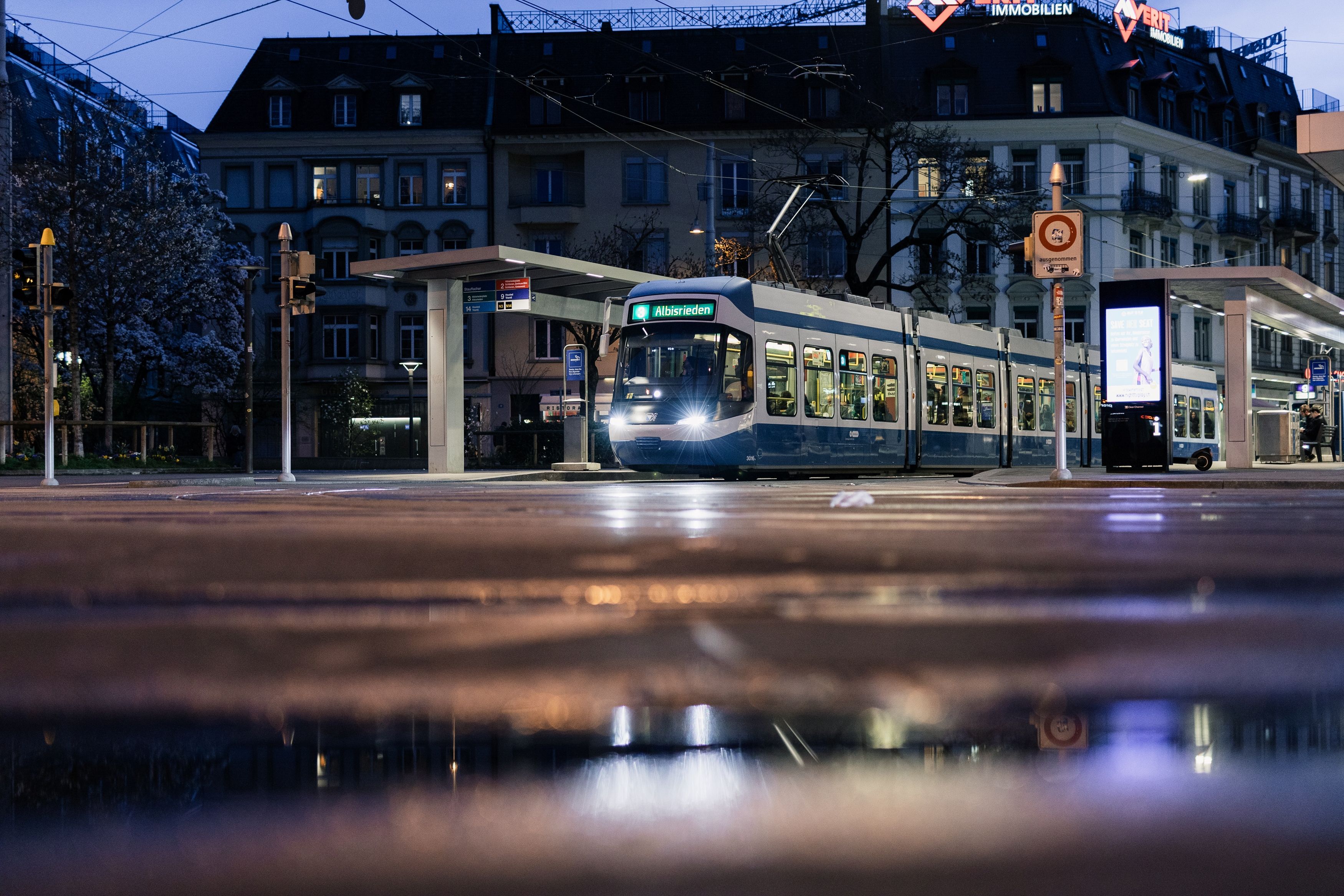
The city of Zurich wants to achieve net zero greenhouse gas emissions by 2040. Like many countries and cities, it currently relies on information that is based on emission inventories. These inventories are similar to an accounting system that includes individual sources with their respective activity data – e.g natural gas consumption - and the corresponding emission factors. Now, for the first time, the city of Zurich can also directly monitor its CO2 emissions, the key component of total greenhouse gas emissions, based on atmospheric observations. In the EU-funded project ICOS Cities, Empa researchers and their colleagues are using a network of high-tech sensors and complex models to precisely determine urban emissions.
Their findings offer a new approach for the city to obtain CO₂ data across all sources within its boundaries. “Our measurements provide an independent and faster method of tracking CO2 emissions. This is crucial for determining whether climate protection measures have a real impact on the atmosphere,” says Lukas Emmenegger, head of Empa's Air Pollution / Environmental Technology Laboratory and scientific project manager for Zurich in the ICOS Cities project.
Sensors throughout the city
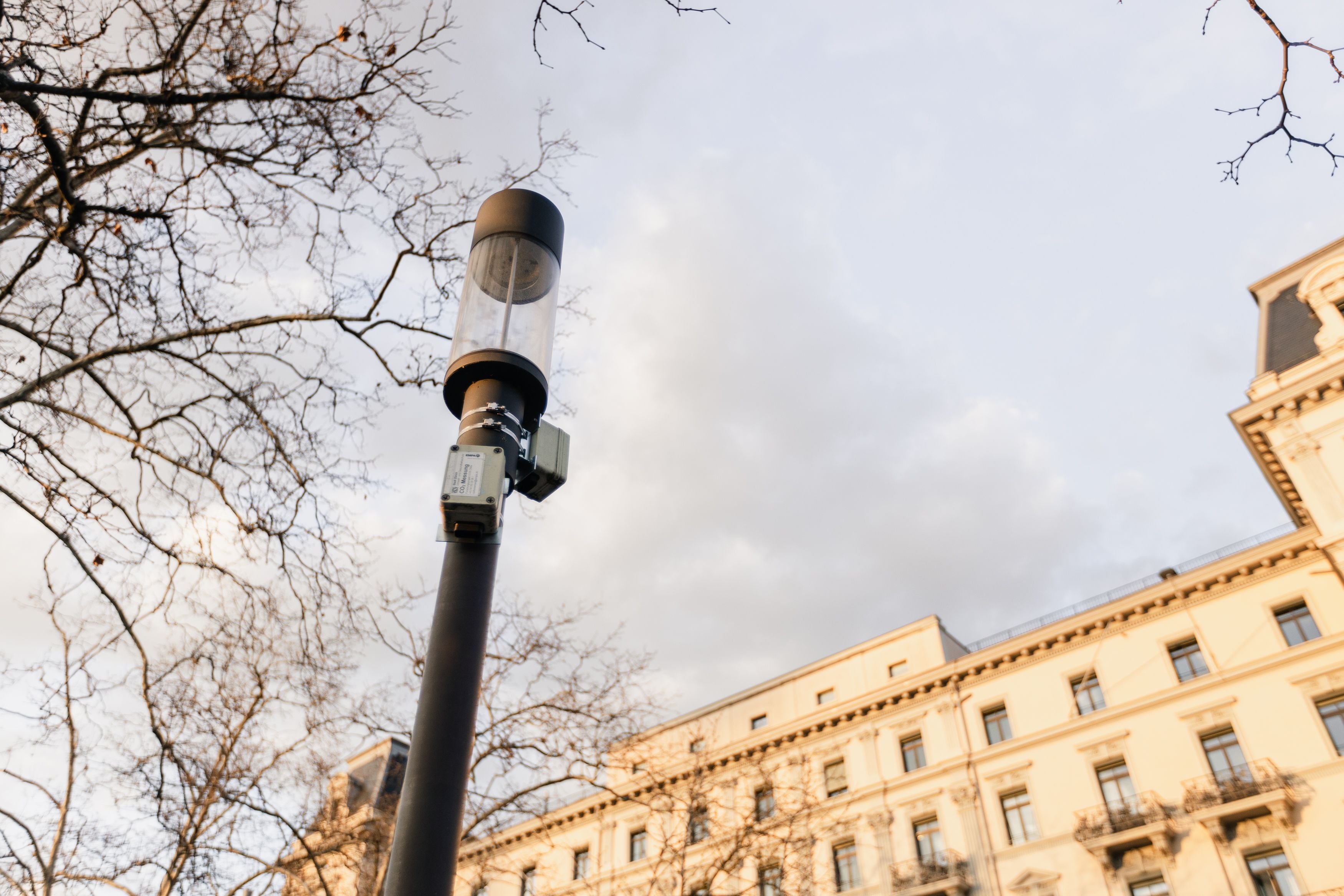
Since summer 2022, Empa has been continuously recording the exchange of CO₂ between the city and the atmosphere in Zurich. A CO₂ measurement network with 60 locations has been set up across the entire city. Compact CO2 sensors are attached to street lamps and trees from Uetliberg to Irchel. In addition, Empa researchers installed around 20 precise CO2 instruments on telecommunication towers. And finally, a sophisticated measuring system from the University of Basel was installed on a high-rise building. It records CO₂ and wind simultaneously around ten times per second. “We can use these measurements to determine emissions directly, but only for an area of about one kilometer around the building,” explains Empa's modeling expert Dominik Brunner.
The multi-year data series forms the basis for the emission monitoring, but the measurements need to be combined with atmospheric transport models. In fact, individual measurements of CO₂ concentrations do not reveal much about actual emissions: From the source to the measurement locations, the emitted CO₂ is transported and diluted through mixing with ambient air. In addition, fossil emissions must be distinguished from natural or biogenic CO₂ sources. Not only do the forests, plants, and soils around the city “breathe” large amounts of carbon dioxide in and out every day –the city's population, through their breathing, also contributes around ten percent to anthropogenic CO₂ emissions.
Tracking CO₂ emissions
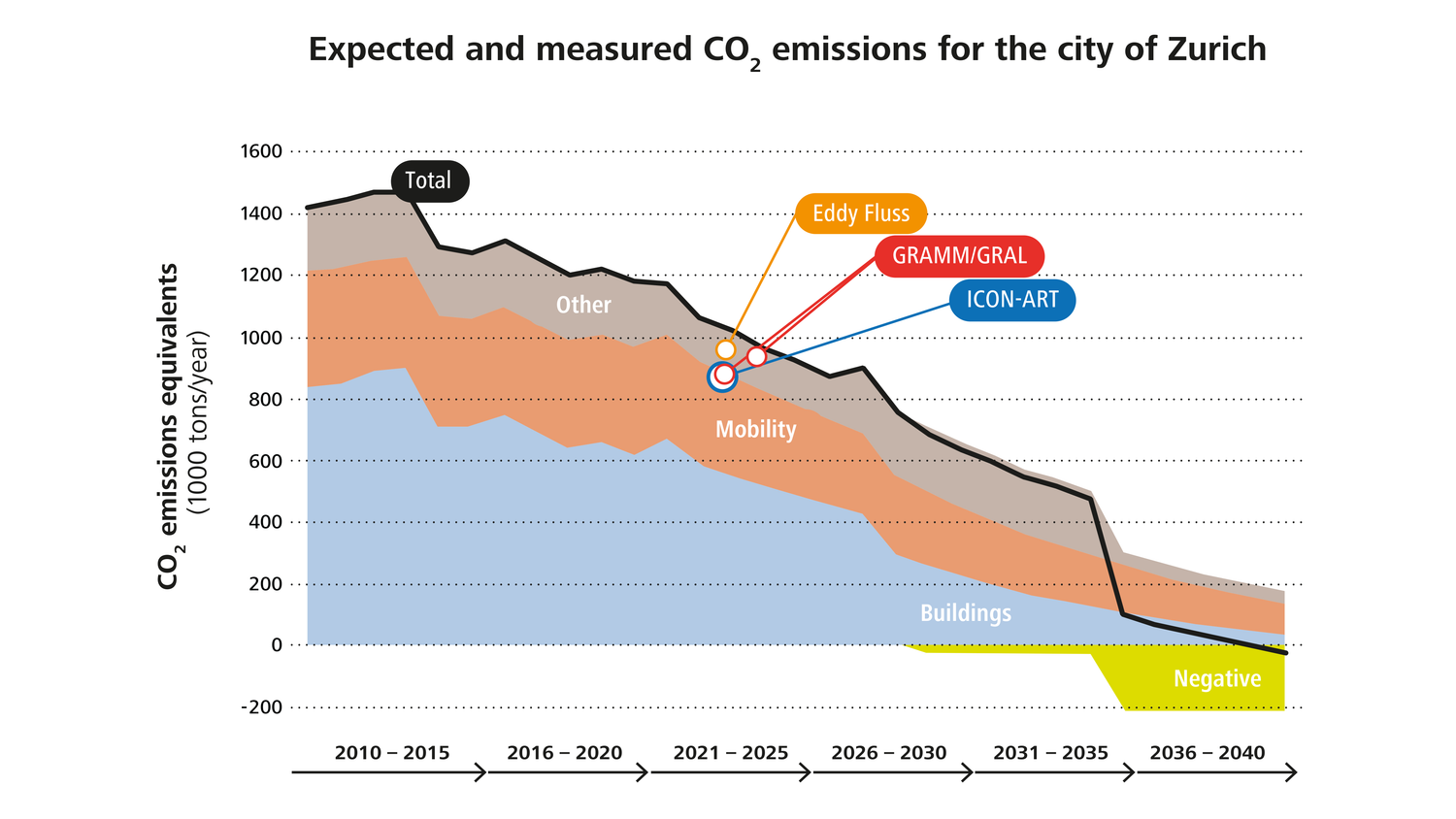
The concentration measurements reflect the sum of many different CO₂ sources. To derive city-wide CO₂ emissions from the observations, they are fed into various models . With the support of its project partners, Empa has developed three different model systems and compared them with each other. The most complex of these (ICON-ART) is based on the same weather prediction model that is also used by MeteoSwiss. It represents the main processes in the atmosphere and shows how CO₂ is emitted, transported, and mixed with a spatial resolution of around 500 meters in a larger region around Zurich. Another model (GRAMM/GRAL) simulates the flow down to the building level. This allows emissions within the city to be captured in a particularly fine-grained manner. “This model is physically simpler, but allows for a very high level of detail,” explains Brunner. The third method (Eddy flux) works in a fundamentally different way: It does not use the CO₂ concentrations from the sensor network, but rather the special emission measurements on the high-rise building and combines this data with a dispersion model to determine where the observed emissions were released at any given time. “The advantage is: We measure the emission flow directly, but this type of modeling only covers a small area,” says the Empa researcher.
Despite their different approaches, all three methods are based on atmospheric observations and produce consistent results. “I was amazed at how close the three methods were to each other,” says Brunner. “The emission inventory may be slightly too high, but this still needs to be confirmed with future data.”
Pioneer in urban emissions monitoring
The city of Zurich has one of the most advanced emission inventories in Europe. Unlike many other cities, Zurich breaks down its fossil fuel emissions not only by sector, such as industry, households, or transport, but also spatially, down to individual street sections or even buildings. In addition to CO2 emissions, the inventory includes other greenhouse gases that affect the climate, such as methane, nitrous oxide, and fluorinated gases. By combining the statistical emission inventory with measured real-time CO2 data from the atmosphere, Zurich can now identify exactly where reduction measures are already taking effect – or where the inventory needs to be readjusted. “The results help the city optimize its inventory. Inventories are fundamental, but atmospheric measurements make it possible to independently verify the CO2 balance and ensure that it reflects reality as accurately as possible,” says Emmenegger.
Following the three-year pilot phase of ICOS Cities, the city of Zurich plans to integrate this advanced monitoring system into its long-term climate strategy. “It's impressive how closely the Empa models match the CO2 values in our climate balance sheet,” says Sabine Marbet from the city of Zurich. “We are therefore examining how we can use the ICOS approach in the future to independently verify greenhouse gas emissions and collect data quickly, dynamically, and with high spatial resolution.” This makes Zurich one of the first cities in Europe to combine emission inventories and atmospheric observations in this way.
ICOS Cities
ICOS Cities is a key initiative of the Integrated Carbon Observation System (ICOS) and provides accurate scientific data on greenhouse gas concentrations and fluxes in urban areas as a basis for long-term monitoring. Alongside Paris and Munich, Zurich is one of the pilot cities where these next-generation monitoring systems are being set up and tested. ICOS itself is a European research infrastructure that studies the carbon cycle and how it is influenced by human activities. ICOS currently collects standardized, freely accessible data from more than 180 measuring stations in 16 European countries. Switzerland is participating with stations on the Jungfraujoch and in Davos. ICOS Cities aims to expand ICOS's three existing focus areas – atmosphere, oceans, and ecosystems – to include cities as important CO₂ emitters. ICOS Switzerland is composed of the ETH Zurich, Empa, and WSL institutes, the Universities of Bern and Basel, and MeteoSwiss.
Further information
Dr. Lukas Emmenegger
Air Pollution / Environmental Technology
Phone +41 58 765 4699
lukas.emmenegger@empa.ch