
Metal corrosion of buildings: Rust never sleeps
Dübendorf, 27.08.2026 — From landmark architecture to street signs, our built environment is exposed to the elements. But which atmospheric factors must new buildings be protected from? And how can the “ravages of time” be slowed down when it comes to World Heritage sites? Empa researchers analyze the corrosion of metal building components and are working on an economical and sustainable approach to combating corrosion.
Good news first: Things are much better today. At least when it comes to corrosion. What was rusting and decaying back in the 1980s, nowadays lasts much longer. However, the challenges of stopping corrosion remain enormous: Even today, several tons of steel are lost to corrosion every second around the world and must be replaced, consuming precious raw materials. Corrosion costs an estimated three to four percent of an industrialized nation’s gross domestic product, resulting in economic damage to bridges, roofs, and railways in the billions.
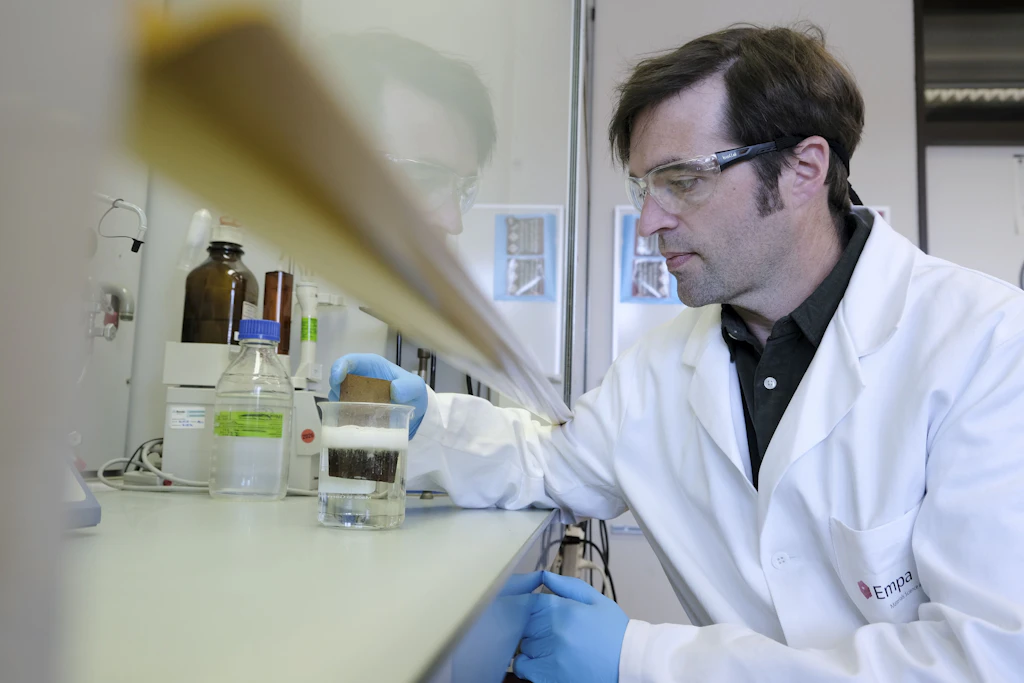
One person investigating the extent and causes of corrosion and working to make the built environment sustainable is Empa researcher Ulrik Hans from the Laboratory for Joining Technology and Corrosion in Dübendorf. And because corrosion knows no borders, he is involved in ICP Materials, short for International co-operative Program on Effects on Materials including Historic and Cultural Monuments, a network with more than 60 locations in Europe and beyond. In its latest report, the network highlighted the significant decline in corrosion based on long-term experiments and published the results in the journal Corrosion and Materials Degradation.
Switzerland as a model country
To investigate the causes and to ensure the long-term protection of buildings intended to stand for generations to come, Ulrik Hans, in collaboration with the Federal Office for the Environment (FOEN), provides data on corrosion rates to the ICP Materials network.
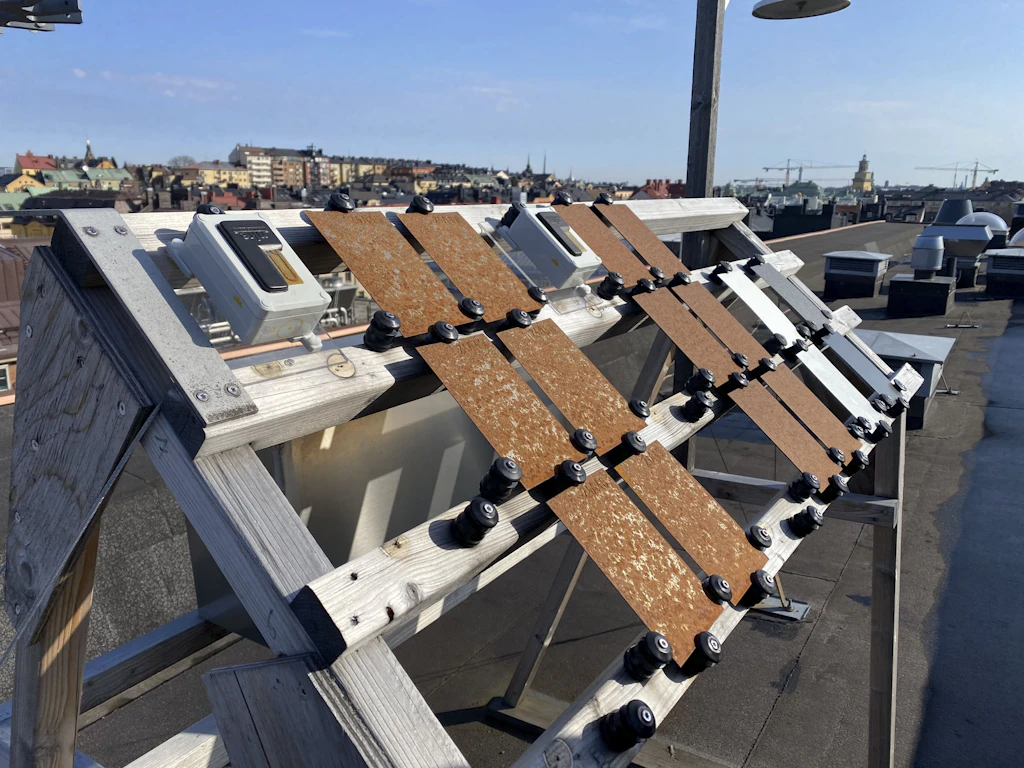
And so, standardized metal samples – such as weather-resistant steel or titanium-zinc, one of the most important roofing materials – are exposed at every site in the network. “Titanium-zinc is popular in construction because it is fully recyclable. For building preservation, it makes a significant difference whether the metal roof and gutters need to be replaced after 40 years or only after 80,” says Hans.
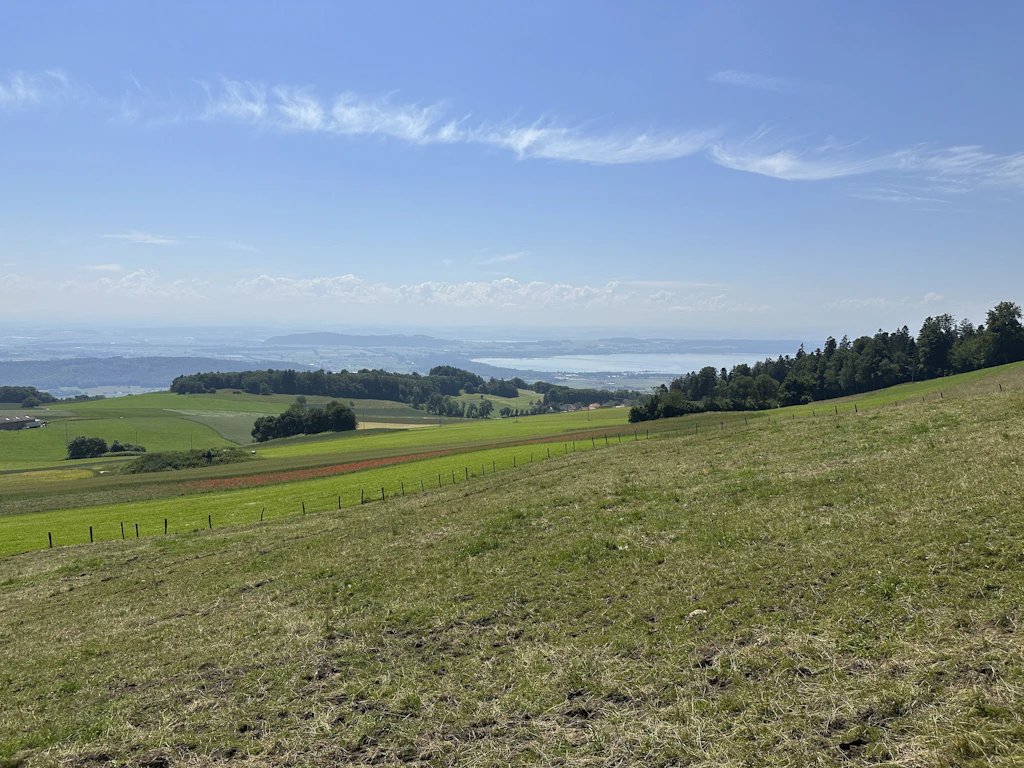
The site in Switzerland on Chaumont, the local mountain of the city of Neuchâtel, is virtually the prime example within the ICP Materials network: The exposed samples corrode practically without harmful environmental influences, solely due to the natural redox reaction of metal, water, and oxygen. At the other end of the scale at the start of the measurements were industrial sites such as Bottrop in Germany and Kopisty in the Czech Republic. In Kopisty, corrosion researchers were able to scrape half a kilogram of rust off one square meter of steel in 1987. Today, however, the situation looks better at all sites. In industrial areas, between 100 and 150 grams of steel per square meter are lost each year.
At Chaumont, just 30 grams are lost to rust at the same time. Zinc, which corrodes less severely, lost around 15 grams per square meter at industrial sites 40 years ago; today, the figure is only about 7 grams at all sites.
Identifying the pollutants of the future
Almost simultaneously with this encouraging development, the data show that the concentration of sulfur dioxide in the air declined – a pollutant that, when measurements began in the 1980s, fell from the sky in the form of acid rain. With peak levels of 460 micrograms (µg) of toxic sulfur dioxide per cubic meter of air, the highest smog alert level was triggered in the Ruhr region. Where industrial emissions are filtered and lignite heating has fallen out of favor, sulfur dioxide has since ceased to be a problem. In industrial areas, levels today are below 10 µg/m³, while on the Chaumont they have fluctuated between 0 and 1 µg/m³ for the past 25 years.
Although the correlation between reduced corrosion and declining sulfur dioxide pollution is obvious, the researchers’ data do not always align with this correlation. “Corrosion is a complex, multifactorial process that is not yet fully understood,” says Ulrik Hans. “We now need to identify other pollutants that will become more relevant in future.” For example, it is still unclear to what extent high ozone levels attack modern polymer materials and how particulate matter promotes corrosion. Nitrogen oxides and volatile hydrocarbons are additional factors that, together with climate change, could influence the durability of metallic infrastructure.
State-of-the-art rust predictions
With a better understanding of these relationships, suitable alloys, coatings or nanometer-thin passive layers can be used to ensure the durability of components such as those produced via additive manufacturing or laser structuring. Added to this is a new challenge for today’s construction industry that did not yet play a role in the construction of Cologne Cathedral or the Acropolis: Today, care must be taken to use existing resources sparingly.
To ensure that development processes for suitable, future-proof products proceed efficiently and sustainably, Empa researchers analyze new materials as early as the development phase. State-of-the-art surface analysis techniques are used, such as Kelvin probe force microscopy or X-ray photoelectron spectroscopy (HAXPES). The only facility of its kind in Switzerland is located in the Joining Technology and Corrosion laboratory at Empa. Thanks to high-energy radiation, HAXPES penetrates deep into the material, allowing for precise characterization of materials and their corrosion properties. “With the resulting meaningful corrosion predictions, durable structures can continue to be efficiently built and maintained in the future,” says Empa researcher Hans with conviction.
Corroding Cultural Heritage
Even World Heritage sites are subject to the ravages of time. Since 2010, the ICP Materials network has therefore been monitoring 26 UNESCO World Heritage sites, such as the Old Town of Bern and the St. Gallen Abbey District. In case studies, the researchers were able to demonstrate that air pollution – and here, above all, road traffic – accounts for up to 80% of the costs of maintaining the buildings. Risk assessments are intended to ultimately make it possible to determine where the line lies between the natural aging of a cultural monument and impending decay, so that restoration work can be carried out according to economic criteria. Data on material composition, metal corrosion, limestone weathering, and environmental pollution are taken into account. Metal corrosion, for example, poses a risk to the lifespan of the copper spire roofs of St. Gallen Cathedral, according to calculations by corrosion researchers. However, the first priority next year is to restore the tiled roof of the church, which is a UNESCO World Heritage Site. Corrosion was at work here as well: The nails in the 100-meter-long roof truss have rusted. The estimated cost will be just under eight million Swiss francs.
Literature
J Tidblad, A Moya Núñez, D de la Fuente, G Ebell, T Flatlandsmo Berglen, T Grøntoft, U Hans, I Christodoulakis, D Kajánek, K Kreislová, L Kwiatkowski, T La Torreta, R Lutze, GP Larrubia, V Pintus, M Prange, P Spezzano, C Varotsos, A Verney-Carron, T Vuorio and T Yates; Corrosion and Soiling in the 21st Century: Insights from ICP Materials and Impact on Cultural Heritage; Corrosion and Materials Degradation (2025); https://doi.org/10.3390/cmd6040054
Informations
Dr. Ulrik Hans
Joining Technologies and Corrosion
Phone +41 58 765 60 07
ulrik.hans@empa.ch